September 1, 2026 Recruitment and Admissions Mapping Your Future: Geography at UCalgary What if your classroom wasn’t always a classroom? Imagine standing in a Rocky Mountain stream with a group of classmates, learning how to measure water flow and collect data that can help us understand everything from flooding to changing landscapes. That’s the kind of hands-on experience you can find in Geography at the University of Calgary. Geography at UCalgary connects people, places and environments—and gives you the tools to understand how they shape one another. You’ll explore questions about climate change, ecosystems, cities, cultures and environmental sustainability while building practical skills you can take beyond the classroom. 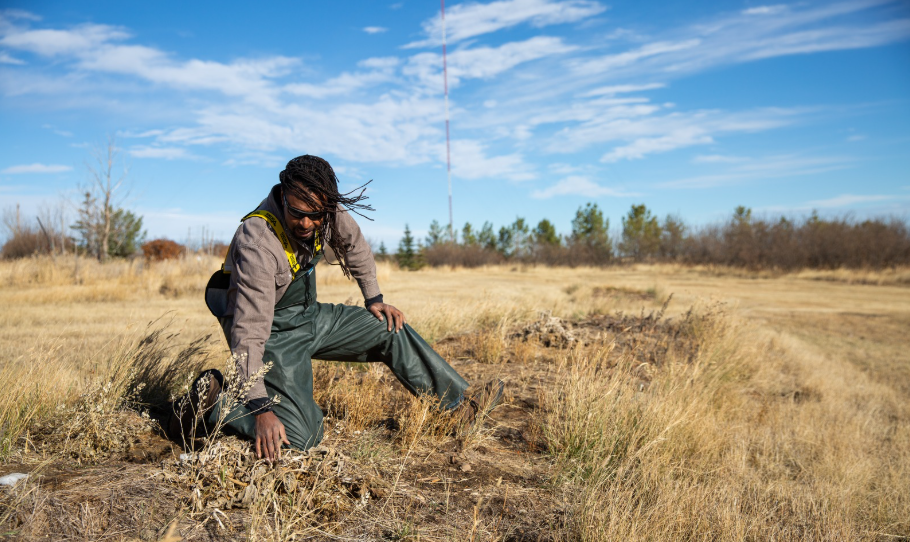 Take your learning into the field UCalgary’s location puts you close to some seriously diverse geography. With the Rockies, rivers, grasslands, agricultural landscapes and a growing urban centre right on your doorstep, Southern Alberta can become your living laboratory. In GEOG 391: Geographic Field Studies, for example, students get hands-on experience with geographic research in Calgary and the surrounding area. Depending on the fieldwork, you could explore topics like hydrology, land-use mapping, vegetation, soils, remote sensing, microclimates or human and urban geography. That means you aren’t just learning about geographic processes, you’re learning how to investigate them yourself. And the opportunities don’t stop close to home. UCalgary Geography also offers international field-study opportunities, including programs in Southeast Asia and Barbados. Put technology on the map If you like working with technology and solving problems, there’s another side of Geography you might not expect. You can build skills in Geographic Information Systems (GIS), remote sensing, digital mapping, geovisualization and spatial analysis. These tools let you collect, analyze and visualize information about the world around us—and they’re used in fields ranging from environmental consulting and sustainability to government, planning and technology. UCalgary also offers an embedded certificate in Geographic Information Science, where students get hands-on experience with industry-standard software, real-world spatial data and equipment such as GPS and survey instruments. Find your perspective One of the best things about Geography is that you don’t have to choose between people and the planet. You might be interested in how climate change affects communities, how cities grow, how landscapes change or how geospatial technology can help solve environmental challenges. Geography lets you explore these questions from both human and physical perspectives. You can also choose between a BA or BSc in Geography, with Honours and Co-operative Education options available. Whether you see yourself collecting data in the field, analyzing satellite imagery, creating digital maps or studying how communities interact with their environments, Geography can help you turn that curiosity into practical skills. So, if you’re looking for a degree that can take you from the classroom to the field, from the Rockies to the map, and from questions to real-world solutions, maybe it’s time to map out your future at UCalgary.
|
Skip to main content